By Ishan Verma, Founder & Editor Theexamhub.in | July 1, 2026
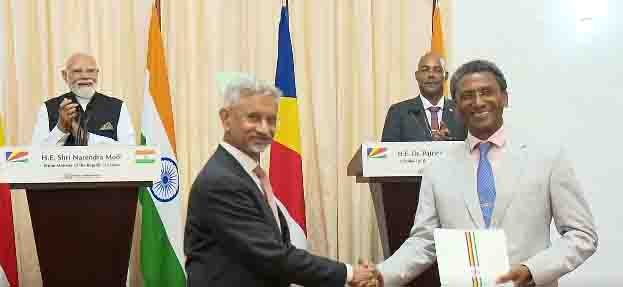
During the official visit of the Prime Minister to the Republic of Seychelles, the ICAR Seychelles MoU (Memorandum of Understanding) was formally signed to strengthen bilateral agricultural cooperation. Executed between the Indian Council of Agricultural Research (ICAR) and the Agriculture Department of Seychelles, this landmark agreement establishes a comprehensive framework for joint research, technology transfer, and educational exchanges. Accompanied by a detailed five-year Work Plan spanning from 2026 to 2031, the agreement aims to bolster climate-smart agriculture and secure food systems across both nations.
The strategic partnership comes at a time when island nations in the Indian Ocean are facing severe ecological pressures due to changing weather patterns. By providing access to India’s advanced agricultural research, the collaboration seeks to build local technical capacity and improve crop yields under challenging climatic conditions.
Core Pillars of the ICAR Seychelles MoU
- Joint Research Programs: Establishing collaborative research initiatives in crop science, soil management, and water-use efficiency.
- Academic and Scientific Exchange: Facilitating mutual exchange programs for agricultural scientists, researchers, and post-graduate students.
- Technology Transfer: Sharing adaptable agricultural technologies, including drought-resistant seed varieties and micro-irrigation systems.
- Five-Year Work Plan: Enacting a dedicated operational road map spanning from 2026 to 2031 to implement key projects.
- Capacity Building: Strengthening Seychelles’ institutional framework through specialized training programs conducted by Indian agricultural universities.
The Signature of the Bilateral Agreement
The signature of the ICAR Seychelles MoU provides a formal framework for technical cooperation. Signed during high-level bilateral talks, the agreement aligns with India’s foreign policy objectives in the Indian Ocean Region (IOR). By working directly with the Ministry of Fisheries, Agriculture and Blue Economy of Seychelles, India aims to support sustainable development in the region.
The agreement focuses on establishing direct links between research laboratories in India and agricultural stations in Seychelles. This decentralized approach is designed to ensure that scientific innovations are translated into practical field solutions, helping local farmers adapt to changing environmental conditions.
To read more about India’s central agricultural research programs and registered international agreements, visit the official website of the Indian Council of Agricultural Research (ICAR).
The 5-Year Work Plan (2026–2031) Explained
To operationalize the goals of the ICAR Seychelles MoU, a five-year Work Plan was enacted, targeting five core sectors of agricultural development:
- Climate-Smart Agriculture: Adapting farming systems to temperature fluctuations and shifting monsoons/tropical weather.
- Horticulture: Improving yield, pest-management, and disease resistance in vegetable and tropical fruit crops.
- Post-Harvest Management: Reducing crop wastage through modern storage, cold-chain processing, and logistics.
- Livestock Development: Enhancing breed quality, veterinary health systems, and sustainable fodder management.
- Sustainable Food and Nutritional Security: Meeting national dietary requirements through diversified agricultural output and food crop cultivation.
For more updates on agricultural policies and bilateral development funds, visit the official Ministry of Agriculture and Farmers Welfare Portal.
India’s Global South Diplomacy in Agriculture
The execution of the ICAR Seychelles MoU reflects India’s growing engagement with the Global South. As a country with highly diverse agro-climatic zones, India has developed cost-effective, scalable, and adaptable agricultural technologies that are well-suited for other developing and island nations. These include drip irrigation systems, organic farming practices, and stress-tolerant seed varieties.
ICAR has signed over 100 Memoranda of Understanding with partner institutions globally, establishing India as a key partner in agricultural development. By sharing these technical resources, India supports food and nutritional security in developing nations, strengthening its diplomatic partnerships through mutual scientific development.
Relevance for UPSC and State PSC Aspirants
For candidates preparing for civil services, the ICAR Seychelles MoU is an informative topic under international relations, security, and agricultural economics. Additional current affairs updates are available in our National News and Security Updates section.
UPSC Civil Services Examination (CSE) Syllabus
- GS Paper II (International Relations): India and its neighborhood- relations; Bilateral, regional and global groupings and agreements involving India and/or affecting India’s interests; Security and economic cooperation in the Indian Ocean Region (SAGAR initiative).
- GS Paper III (Agriculture): Different types of irrigation and irrigation systems storage; transport and marketing of agricultural produce and issues and related constraints; Technology in the aid of farmers; Food security and climate-resilient agriculture.
State PSC (CGPSC/State Exams) Syllabus
- Science and Technology: Contribution of Indian scientific institutions (ICAR) in global research, biotechnology in agriculture, and seed development.
- Economic Geography: Global crop distribution, sustainable land-use patterns, and bilateral trade agreements in primary resources.
Quick Revision Table: ICAR Seychelles MoU
| Key Parameter | Details of the Bilateral Agreement |
|---|---|
| Agreement | ICAR Seychelles MoU (Bilateral Agriculture Agreement) |
| Signing Context | Official visit of the Prime Minister to the Republic of Seychelles (July 1, 2026) |
| Signatory Agencies | ICAR (India) and the Agriculture Department (Republic of Seychelles) |
| Work Plan Duration | 5-Year Work Plan (2026–2031) |
| Key Focus Sectors | Climate-smart agriculture, horticulture, livestock, post-harvest management, food security |
| Diplomatic Alignment | Global South cooperation, Indian Ocean Region security, SAGAR initiative |
Frequently Asked Questions (FAQs)
1. What is the primary objective of the ICAR Seychelles MoU?
The primary objective of the ICAR Seychelles MoU is to strengthen bilateral cooperation in agricultural research, education, capacity building, and technology transfer between India and the Republic of Seychelles.
2. What is the timeline of the Work Plan associated with the ICAR Seychelles MoU?
The agreement includes a five-year Work Plan spanning from 2026 to 2031, which details specific cooperative projects to operationalize the Memorandum of Understanding.
3. What are the key focus areas of the 5-year Work Plan?
The Work Plan focuses on climate-smart agriculture, horticulture, post-harvest management, livestock development, and sustainable food and nutritional security.
4. How does this agreement benefit the Republic of Seychelles?
Seychelles will gain direct access to India’s agricultural innovations, including climate-resilient crop varieties, pest-management strategies, and academic training programs for its local researchers and scientists.
5. How many international agreements has ICAR signed globally?
With the signing of this agreement, ICAR has established over 100 Memoranda of Understanding with partner institutions worldwide, supporting global food security through international cooperation.
Conclusion
The cooperative framework achieved through the ICAR Seychelles MoU highlights India’s role in supporting climate adaptation and sustainable agriculture globally. By combining scientific research with a detailed five-year Work Plan, both nations are taking practical steps to address the shared challenges of climate change and food security. Ultimately, as global weather patterns continue to shift, partnerships that share technical knowledge and build local capacity will remain essential for establishing resilient agricultural systems and ensuring food security across the Global South.