Ishan Verma, Founder & Editor Theexamhub.in
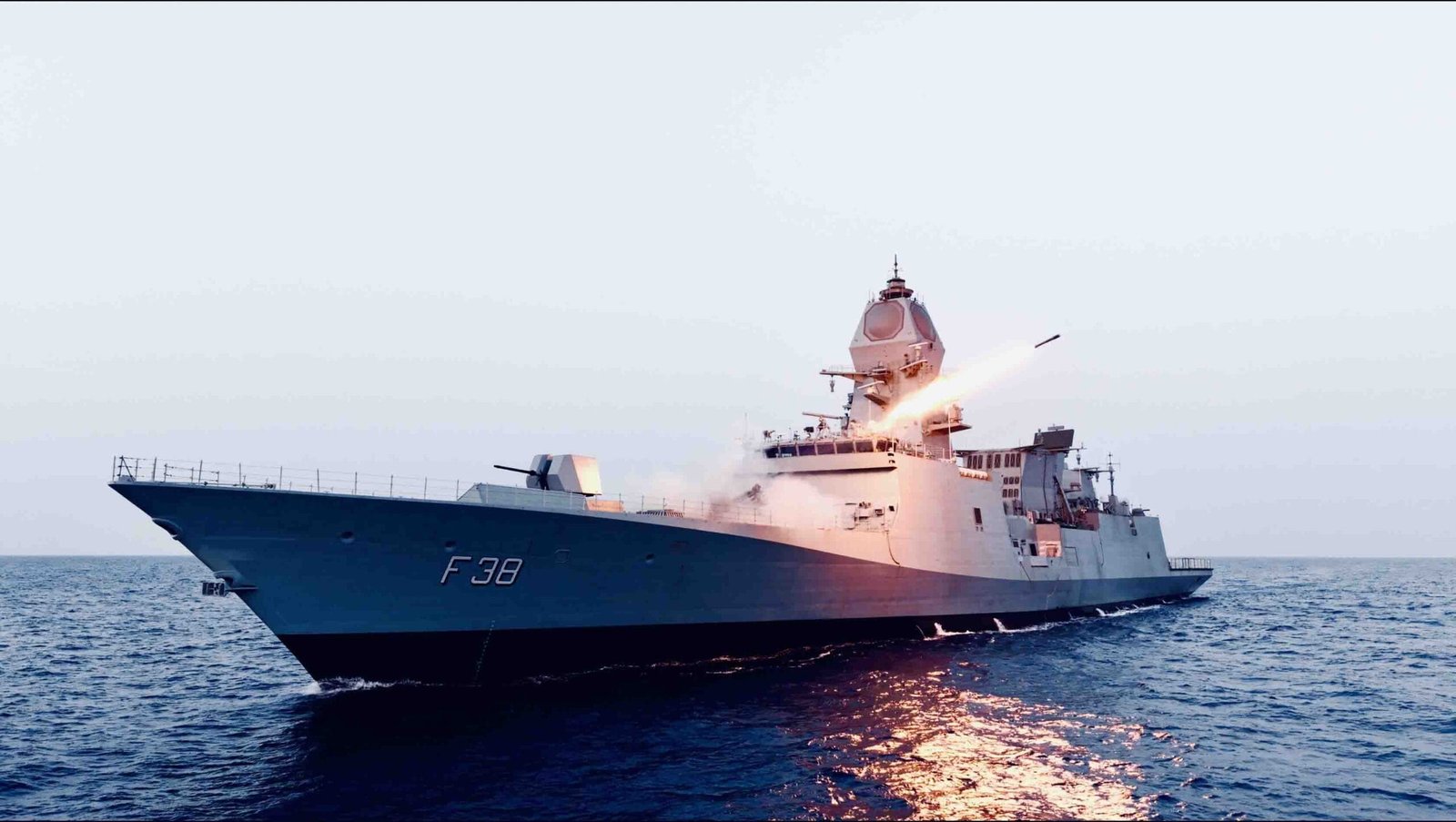
The Indian Navy will commission INS Mahendragiri (F38) — its sixth and final Project 17A stealth frigate — at Visakhapatnam on 11 July 2026. Designed by the Warship Design Bureau (WDB) and built by Mazagon Dock Shipbuilders Limited (MDL), Mumbai, the warship was delivered to the Navy on 30 April 2026. With over 75 percent indigenous content, Mahendragiri stands as a powerful symbol of India’s journey from a “buyer’s navy” to a “builder’s navy.”
Quick Highlights
- Ship Name: INS Mahendragiri (F38) — named after the Mahendragiri mountain range in the Eastern Ghats
- Class: Nilgiri class (Project 17A) stealth guided-missile frigate
- Commissioning Date: 11 July 2026 at Visakhapatnam
- Builder: Mazagon Dock Shipbuilders Limited (MDL), Mumbai
- Designer: Indian Navy’s Warship Design Bureau (WDB)
- Indigenous Content: Over 75%
- Displacement: ~6,670 tonnes
- Length: 149 metres
- Maximum Speed: 32 knots (~59 km/h)
- Sequence: Sixth and final ship of Project 17A; fourth built by MDL
Background: The Project 17A Programme
Project 17A is one of the Indian Navy’s most ambitious indigenous warship-building programmes. It is the successor to Project 17 (Shivalik class) frigates and represents a generational leap in stealth design, weapons integration, and automation.
Programme at a Glance
| Parameter | Details |
|---|---|
| Total Ships Planned | 7 frigates |
| Shipyards Involved | MDL Mumbai (4 ships) and GRSE Kolkata (3 ships) |
| Designer | Warship Design Bureau (WDB), Indian Navy |
| Cost Per Frigate | ~₹4,000 crore (~US$490 million) |
| Total Programme Cost | ~₹45,000 crore (~US$5.5 billion) |
| Indigenous Content | 75% |
| MSMEs Involved | Over 200 |
| Employment Generated | ~4,000 direct and 10,000+ indirect personnel |
| Construction Period | 2017 – present |
| Steel Supplier | SAIL (Bokaro, Bhilai, Rourkela plants) — ~4,000 tonnes per ship |
The programme was designed in-house by the Warship Design Bureau (formerly the Directorate of Naval Design) — the pioneer organisation for all warship design activities in India. The design was finalised in 2013 and first unveiled publicly at DefExpo 2018 in Chennai.
Timeline: Project 17A Ships Delivered and Commissioned
| Ship Name | Hull No. | Shipyard | Key Date | Event |
|---|---|---|---|---|
| INS Nilgiri | F33 | MDL | 20 December 2024 | Delivered to Indian Navy |
| INS Himgiri | F34 | GRSE | 26 August 2025 | Commissioned |
| INS Udaygiri | F35 | MDL | 26 August 2025 | Commissioned |
| INS Taragiri | F36 | MDL | 28 November 2025 | Delivered |
| INS Dunagiri | F37 | GRSE | 2026 | Delivered / Commissioned |
| INS Mahendragiri | F38 | MDL | 11 July 2026 | To be commissioned |
Did You Know? The delivery of six P17A ships in less than 17 months is a testament to India’s warship-building capability. The build period for Taragiri was compressed to 81 months, compared to 93 months for the first-of-class Nilgiri.
Why in News?
INS Mahendragiri is in the news because the Indian Navy will formally commission her at Visakhapatnam on 11 July 2026. This is the sixth and final ship of the Project 17A programme, marking the successful completion of one of India’s largest indigenous warship-building projects.
The commissioning comes at a time when India is rapidly strengthening its maritime capabilities in the Indian Ocean Region (IOR). With Mahendragiri joining the fleet, the Indian Navy gains a formidable multi-role platform that can undertake anti-air, anti-surface, anti-submarine warfare, as well as Humanitarian Assistance and Disaster Relief (HADR) and Search and Rescue (SAR) missions.
Importantly, the ship is named after the Mahendragiri mountain range in the Eastern Ghats and is the first Indian Naval warship to carry this name, making it sui generis — truly one of a kind.
Key Features and Technical Specifications
Design and Stealth
The Nilgiri-class frigates incorporate advanced stealth technology to achieve a low radar cross-section (RCS) and reduced infrared signature. Key design elements include:
- Composite materials and radar-absorbent coatings
- Low-observable and radar-transparent technologies across the hull and superstructure
- Reduced radar signature and enhanced survivability features
- Integrated modular construction — the first major class of Indian-designed warships to use this technique
Technical Specifications
| Specification | Details |
|---|---|
| Displacement | ~6,670 tonnes |
| Length | 149 m (488 ft 10 in) |
| Beam | 17.8 m (58 ft 5 in) |
| Draft | 5.22 m (17 ft 2 in) |
| Maximum Speed | 32 knots (59 km/h) |
| Range at 28 knots | 2,500 nautical miles (4,600 km) |
| Range at 16–18 knots | 5,500 nautical miles (10,200 km) |
| Propulsion | CODOG (Combined Diesel or Gas) |
| Complement | 226 (35 officers + 191 sailors) |
| Aircraft | 1 × HAL Dhruv or Sea King Mk. 42B helicopter |
Weapons and Sensors Suite
INS Mahendragiri is equipped with a potent and advanced weapons and sensors suite, enabling it to operate across the full spectrum of naval operations:
- BrahMos Supersonic Cruise Missiles — for long-range precision anti-ship and land-attack capability
- Barak-8 / MRSAM (Medium Range Surface-to-Air Missile) — advanced air defence system for fleet protection
- MF-STAR AESA Radar — an advanced multi-function surveillance and tracking radar for superior detection
- 76mm Super Rapid Gun Mount (SRGM) — for close-range surface and air engagements
- 30mm and 12.7mm Close-In Weapon Systems (CIWS) — for terminal defence against incoming threats
- Anti-Submarine Warfare (ASW) Systems — including torpedoes and rocket launchers
- Sophisticated Electronic Warfare (EW) capabilities
- Integrated Combat Management System (CMS) for real-time threat assessment and response
- Enclosed helicopter hangar accommodating one multi-role helicopter
Benefits of INS Mahendragiri and Project 17A
For National Security
- Multi-domain capability: Anti-air, anti-surface, and anti-submarine warfare roles make it a versatile combat platform
- Force multiplier: Enhances the Indian Navy’s blue-water capability and power projection across the Indo-Pacific
- Carrier Battle Group integration: Project 17A frigates will form part of the Carrier Battle Group of INS Vikrant, India’s indigenous aircraft carrier
- Strategic presence: Strengthens India’s role as the “Preferred Security Partner” in the Indian Ocean Region
For Self-Reliance (Aatmanirbhar Bharat)
- 75% indigenous content reduces dependence on foreign defence imports
- Over 200 MSMEs involved in the supply chain, strengthening the domestic defence industrial ecosystem
- Employment generation: ~4,000 direct and 10,000+ indirect jobs created
- Indigenous OEMs like BEL, BHEL, L&T, Mahindra, BAPL, and MTPF contributed key equipment and systems
- Transition narrative: India has moved from a “buyer’s navy” to a “builder’s navy”
For the Defence Industrial Base
- Capability demonstration: Six P17A ships delivered in under 17 months shows mature shipbuilding capacity
- Technology development: Radar-absorbent coatings, integrated combat systems, and CODOG propulsion have been refined through this programme
- Future readiness: Lessons from Project 17A will feed into the next-generation Project 17B frigates
Challenges
- Complex supply chains: While indigenous content is high at 75%, some critical sub-systems and technologies still rely on foreign collaboration
- Cost pressures: At ~₹4,000 crore per ship, the programme demands significant fiscal commitment from the defence budget
- Construction timelines: The first-of-class Nilgiri took 93 months to build; subsequent ships benefited from experience but still require careful schedule management
- Technological obsolescence: Rapid advances in naval warfare technology require continuous upgrades to sensors and weapons suites
- Manpower and training: Manning a growing fleet of advanced warships requires well-trained sailors and officers, with a complement of 226 per ship
Government Initiatives Supporting Indigenous Naval Power
- Aatmanirbhar Bharat Initiative: The overarching policy driving self-reliance in defence manufacturing
- Indian Naval Indigenisation Plan (INIP) 2015–2030: A structured roadmap for indigenisation of naval platforms and equipment
- Warship Design Bureau (WDB): The Indian Navy’s in-house design organisation responsible for all indigenous warship designs
- Defence Budget Growth: The Navy’s budget grew from ₹49,623 crore in 2020–21 to ₹1,03,548 crore in 2025–26, increasing its share of total defence spending from 15% to 21%
- 51 large ships under construction in Indian shipyards, valued at approximately ₹90,000 crore
- Vision 2047: The Indian Navy’s long-term transformation roadmap towards becoming a fully indigenous, technologically advanced force
National Importance
India’s coastline stretches approximately 11,098 kilometres with a 2.4 million sq. km Exclusive Economic Zone (EEZ). Close to 50% of global trade and 40% of global oil passes through the Indo-Pacific region, and 90% of India’s trade transits through maritime routes. INS Mahendragiri and the broader P17A fleet directly safeguard these critical sea lines of communication.
Since 2014, Indian shipyards have delivered over 40 indigenous warships and submarines, with a new vessel being inducted on average every 40 days in the last year. Nearly 67% of the Navy’s capital acquisition over the past decade has been with Indian industries. The commissioning of the 100th indigenously designed vessel in August 2025 marked a historic milestone in this journey.
International Significance
The successful completion of the Project 17A programme positions India among a select group of nations capable of designing and building advanced stealth warships indigenously. This capability enhances India’s standing as a net security provider in the Indian Ocean Region.
The Indian Navy has conducted sustained anti-piracy deployments in the Gulf of Aden since 2008, facilitating safe transit for 3,765 merchant vessels and protecting over 27,260 seafarers. With frigates like Mahendragiri joining the fleet, India’s capacity for Humanitarian Assistance and Disaster Relief (HADR), maritime security operations, and power projection grows significantly.
Latest Developments (as of July 2026)
- 30 April 2026: INS Mahendragiri (F38) delivered to the Indian Navy at MDL, Mumbai — the sixth P17A ship delivered in under 17 months
- 11 July 2026: Formal commissioning ceremony scheduled at Visakhapatnam
- Remaining P17A ships: All seven frigates have been launched; the final ship is expected to be delivered by August 2026
- Project 17B: The successor programme of 7–8 next-generation frigates is already in the pipeline
- SAIL steel supply: Steel Authority of India Limited continued supplying ~4,000 tonnes of indigenous steel per ship from its Bokaro, Bhilai, and Rourkela plants
Exam Relevance
UPSC Relevance
- GS Paper II (Governance & International Relations): India’s defence indigenisation, Aatmanirbhar Bharat, and India’s role in the Indian Ocean Region
- GS Paper III (Security & Technology): Defence technology, indigenous weapons systems, and naval modernisation
- Essay Paper: Themes on self-reliance, technological sovereignty, and India as a maritime power
Prelims Facts
- INS Mahendragiri is the sixth ship of the Nilgiri class (Project 17A) stealth frigates
- Designed by the Warship Design Bureau (WDB) of the Indian Navy
- Built by Mazagon Dock Shipbuilders Limited (MDL), Mumbai
- Named after Mahendragiri mountain range in the Eastern Ghats
- Propulsion: CODOG (Combined Diesel or Gas)
- Indigenous content: 75%
- Part of Aatmanirbhar Bharat initiative
- Displacement: ~6,670 tonnes; Length: 149 m; Speed: 32 knots
Mains Perspective
Possible Question: “Discuss the significance of Project 17A in India’s journey towards self-reliance in defence manufacturing. How does it contribute to India’s strategic maritime objectives?”
Key Points to Cover: Indigenous design and construction, 75% indigenous content, role of MSMEs, stealth technology, multi-role capability, Indian Ocean security, Aatmanirbhar Bharat, transition from buyer’s to builder’s navy, Vision 2047.
Static GK Connection
- Nilgiri mountains: Part of the Western Ghats in Tamil Nadu and Kerala
- Mahendragiri mountain: Located in the Eastern Ghats in Odisha’s Gajapati district; associated with mythological significance (abode of Lord Parashurama)
- Mazagon Dock Shipbuilders Limited: Established in 1934; India’s leading defence shipyard
- Garden Reach Shipbuilders & Engineers (GRSE): Kolkata-based defence PSU shipyard
- BrahMos: Indo-Russian supersonic cruise missile; fastest in its class at Mach 2.8–3.0
Possible Exam Questions
- INS Mahendragiri belongs to which class of warships?
- Which shipyard built the sixth Project 17A frigate?
- What is the indigenous content percentage of Project 17A frigates?
- What propulsion system do the Nilgiri-class frigates use?
- How many ships are part of the Project 17A programme, and how are they distributed between MDL and GRSE?
- What is the role of the Warship Design Bureau?
- Name the missile systems onboard Project 17A frigates.
- What programme succeeds Project 17A?
One-Liner Revision Points
- INS Mahendragiri (F38) = sixth and final Project 17A stealth frigate
- Commissioning: 11 July 2026, Visakhapatnam
- Named after Mahendragiri mountain range, Eastern Ghats — first warship to bear this name
- Built by MDL, Mumbai; designed by Warship Design Bureau
- 75% indigenous content; 200+ MSMEs involved
- Armed with BrahMos missiles, Barak-8/MRSAM, MF-STAR radar, 76mm SRGM
- Displacement: ~6,670 tonnes; Speed: 32 knots; Length: 149 m
- CODOG propulsion system
- Preceded by Shivalik class (Project 17); succeeded by Project 17B
- Total programme cost: ~₹45,000 crore
- Six P17A ships delivered in under 17 months
Important Points to Remember
Key Data Box: INS Mahendragiri at a Glance
| Attribute | Detail |
|---|---|
| Hull Number | F38 |
| Class | Nilgiri (Project 17A) |
| Ship Sequence | 6th of 7; 4th built by MDL |
| Delivery Date | 30 April 2026 |
| Commissioning Date | 11 July 2026 |
| Commissioning Venue | Visakhapatnam |
| Key Weapons | BrahMos, MRSAM/Barak-8, 76mm SRGM, ASW torpedoes & rockets |
| Key Sensors | MF-STAR AESA radar, EW suite |
| Helicopter | HAL Dhruv or Sea King Mk. 42B |
| Motto | “Mighty – Majestic – Matchless” |
Frequently Asked Questions (FAQs)
1. What is INS Mahendragiri?
INS Mahendragiri (F38) is the sixth and final Project 17A (Nilgiri-class) indigenous stealth guided-missile frigate built for the Indian Navy. It is being commissioned on 11 July 2026 at Visakhapatnam.
2. Who designed and built INS Mahendragiri?
The ship was designed in-house by the Indian Navy’s Warship Design Bureau (WDB) and constructed by Mazagon Dock Shipbuilders Limited (MDL), Mumbai. It is the fourth P17A ship built by MDL.
3. What are the key weapons and sensors of INS Mahendragiri?
The frigate is equipped with BrahMos supersonic cruise missiles, Barak-8/MRSAM air defence system, MF-STAR AESA radar, 76mm SRGM, close-in weapon systems, anti-submarine torpedoes, and rocket launchers.
4. What is the significance of Project 17A?
Project 17A is India’s largest indigenous warship programme, involving seven stealth frigates with 75% indigenous content. It demonstrates India’s capability to design and build advanced warships domestically, supporting the Aatmanirbhar Bharat vision.
5. How does INS Mahendragiri differ from the Shivalik-class frigates?
Project 17A frigates are follow-on successors to the Shivalik class (Project 17), featuring improved stealth design, reduced radar cross-section, enhanced automation, a more advanced weapons and sensors suite, and integrated modular construction.
6. What is Project 17B?
Project 17B is the planned successor to Project 17A, involving an additional seven to eight next-generation frigates for the Indian Navy. It will build upon the technologies and lessons learned from the Nilgiri-class programme.
7. Why is the ship named Mahendragiri?
The ship is named after the Mahendragiri mountain range in the Eastern Ghats, Odisha. It is the first Indian Naval warship to bear this name, symbolising resilience, strength, and unwavering resolve.
Conclusion
The commissioning of INS Mahendragiri (F38) on 11 July 2026 marks the successful culmination of the Project 17A programme — a defining chapter in India’s indigenous warship-building journey. With over 75% indigenous content, cutting-edge stealth features, and a formidable weapons suite, Mahendragiri embodies the nation’s transition from a “buyer’s navy” to a “builder’s navy.”
As India strengthens its role as the preferred security partner in the Indian Ocean Region, frigates like Mahendragiri will serve as powerful force multipliers — safeguarding maritime interests, projecting power across the Indo-Pacific, and contributing to a secure and stable maritime order. The programme’s legacy will continue through the Project 17B series, ensuring that India’s shipbuilding momentum carries forward into the future.
Motto of INS Mahendragiri: “Mighty – Majestic – Matchless”