By Ishan Verma, Founder & Editor Theexamhub.in | July 4, 2026
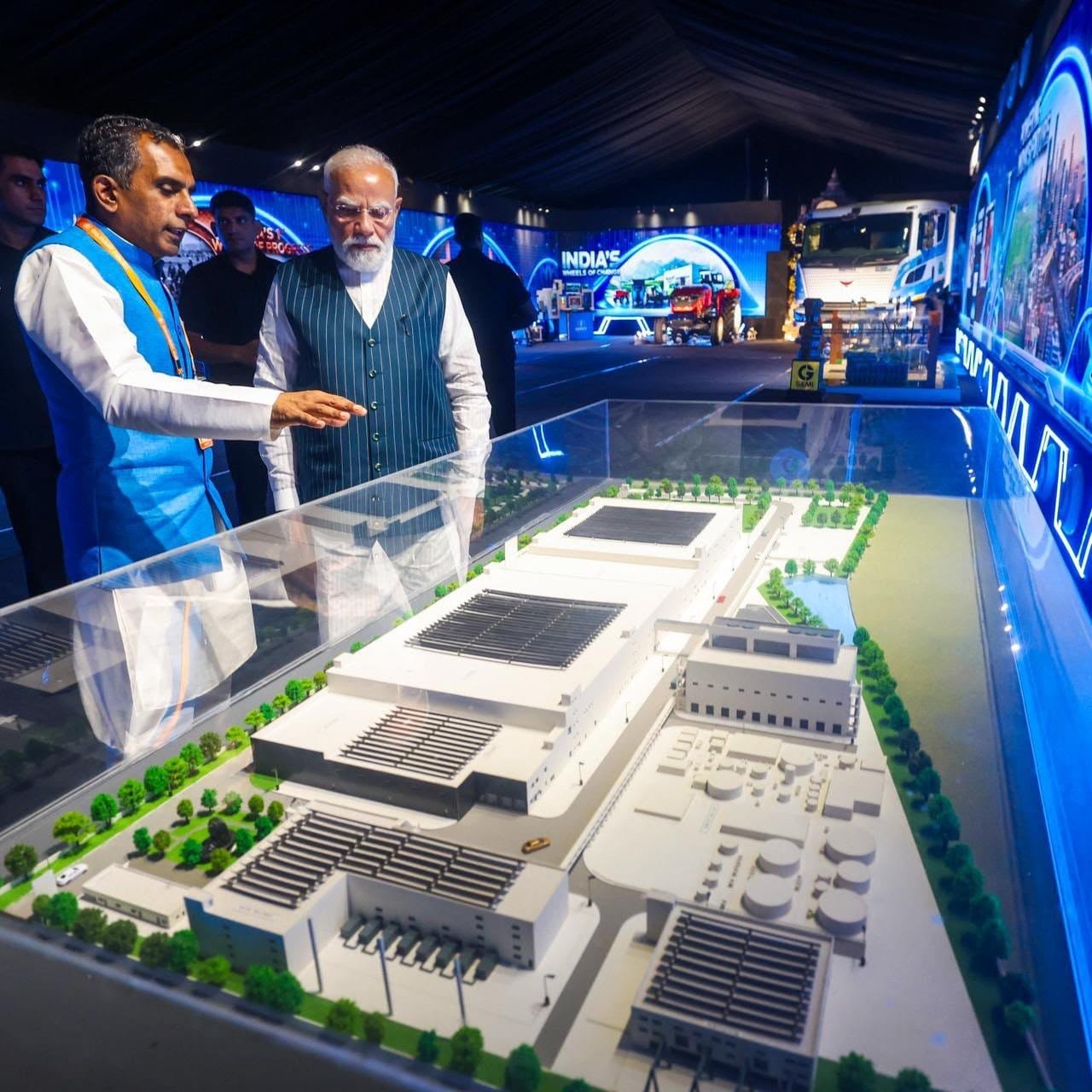
In a decisive leap forward for India’s high-tech manufacturing sector, Prime Minister Narendra Modi officially inaugurated the state-of-the-art CG Semi OSAT facility Sanand in Gujarat. This Outsourced Semiconductor Assembly and Test (OSAT) plant represents a landmark development in the nation’s journey toward establishing a self-reliant semiconductor ecosystem. Designed to strengthen domestic electronic supply chains, the facility highlights India’s transition from a technology consumer to an active global manufacturer of microchips under the Semicon India program.
The inauguration represents a strategic milestone, demonstrating India’s capacity to translate ambitious policy resolutions into commercial realities. This new packaging plant will support the local semiconductor ecosystem, providing the essential components needed to power modern artificial intelligence, robotics, and consumer electronics.
Core Milestones of the CG Semi OSAT facility Sanand
- Commercial Scale: Starts operations with a capacity of 20 crore units annually, with a long-term target of reaching 500 crore units.
- International Alliance: Built as a trilateral collaborative venture involving domestic, Japanese, and Thai industrial partners.
- Rapid Execution: Progressed from its foundation stone laying in 2024, through initial testing in August 2025, to commercial production in July 2026.
- Cluster Development: Joins major players like Micron and Kaynes to establish Sanand as a prominent high-tech industrial cluster.
- Social Integration: Actively employs young women from local tribal communities, who were provided with specialized technical training in Malaysia.
The Strategic Importance of OSAT in Chip Manufacturing
The commercial launch of the CG Semi OSAT facility Sanand represents a critical phase in the semiconductor manufacturing chain. While fabrication (fab) units manufacture silicon wafers, OSAT facilities perform the essential tasks of packaging, testing, and assembling these wafers into completed microchips. This process ensures that delicate microstructures are protected, electrically connected, and tested for performance before integration into final products.
By establishing a domestic OSAT facility, India is closing a critical gap in its electronics manufacturing ecosystem. Previously, even locally designed chips had to be sent abroad for packaging and testing. Localizing this phase of the supply chain reduces production lead times, lowers shipping costs, and protects intellectual property, making domestic electronics manufacturing more competitive.
To read more about the government’s guidelines on semiconductor design and financial incentives, visit the official website of the Ministry of Electronics and Information Technology (MeitY).
Sanand: Developing a High-Tech Industrial Cluster
Developing the CG Semi OSAT facility Sanand within the region is part of a deliberate strategy to build integrated industrial clusters. Prime Minister Modi compared the development of Sanand to global high-tech hubs like Silicon Valley (USA), Hsinchu Science Park (Taiwan), and Tsukuba Science City (Japan). He explained that manufacturing competitiveness does not rely on isolated factories but on complete, localized supply systems.
With companies like Micron, Kaynes, and CG Semi establishing operations in close proximity, Sanand is developing into a specialized semiconductor cluster. This concentration of industries attracts secondary suppliers, including chemical manufacturers, testing laboratories, custom packaging makers, and technology startups, creating a self-sustaining industrial ecosystem that drives regional economic growth.
To explore investment frameworks and the growth of high-tech manufacturing corridors, visit the official portal of Invest India.
The Next Phase of “Make in India”
Through the commissioning of the CG Semi OSAT facility Sanand, the government is executing the next phase of the “Make in India” program. Over the past decade, India’s electronics sector has undergone significant expansion. Since 2014, overall electronics production has increased nearly seven times, and exports have grown eleven-fold. India has also become the world’s second-largest producer and exporter of mobile phones, following a 33-fold increase in domestic production.
Having established a strong base in final product assembly, India is now focusing on producing high-value components, with semiconductors at the center of this strategy. This transition from basic assembly to advanced component manufacturing forms a key part of the roadmap to achieving a *Viksit Bharat* (Developed India) by 2047.
Empowering Tribal Youth through High-Tech Skills
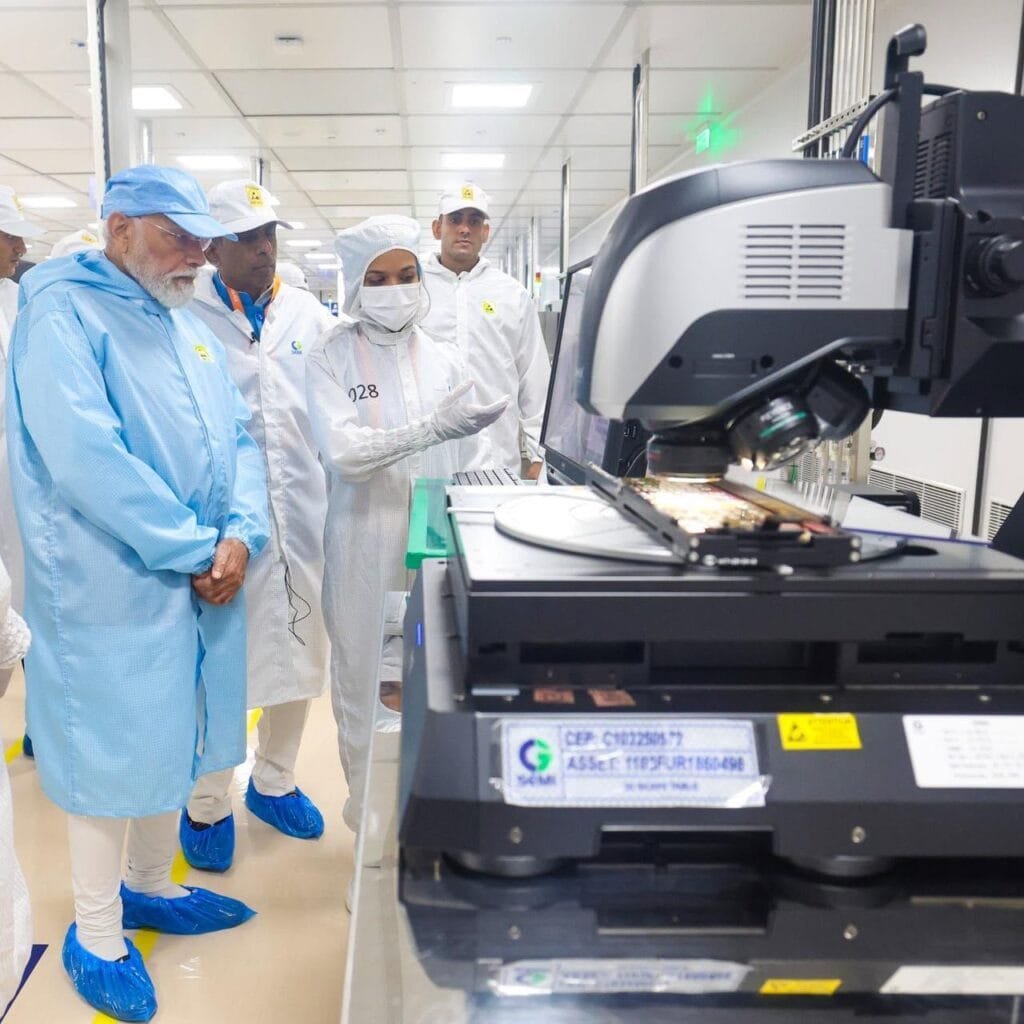
Beyond technical metrics, the CG Semi OSAT facility Sanand stands out for its focus on social inclusivity and workforce development. During his visit, the Prime Minister highlighted the contribution of young women from local tribal communities who are employed at the cleanroom facility. These women, graduates of regional Industrial Training Institutes (ITIs), were provided with advanced technical training in Malaysia to manage state-of-the-art semiconductor assembly machinery.
This initiative shows how high-tech industrialization can create meaningful employment opportunities for marginalized communities, helping to bridge the rural-urban divide. By equipping rural and tribal youth with advanced technical skills, the program ensures that the benefits of the technology sector are shared broadly across society.
Relevance for UPSC and State PSC Aspirants
For candidates preparing for civil services, the CG Semi OSAT facility Sanand is a valuable case study on industrial policy, technology development, and economic planning. Candidates can access additional scientific and industrial policy reviews in our National News and Infrastructure Section.
UPSC Civil Services Examination (CSE) Syllabus
- GS Paper III (Technology & Economy): Indigenization of technology and developing new technology; growth and development of the electronics and semiconductor industry (India Semiconductor Mission); and industrial corridor development.
- GS Paper II (Governance): Public-Private Partnerships (PPP) in high-tech manufacturing, skill development programs (Skill India), and welfare schemes targeting tribal youth and women.
State PSC (GPSC/CGPSC) Syllabus
- State Industrial Policy: Development of specialized manufacturing zones (like Sanand and Dholera in Gujarat), state incentives for high-tech industries, and employment generation.
- Economic Geography: Location factors for the electronics and semiconductor industries, regional raw material supply chains, and export logistics.
Quick Revision Table: CG Semi OSAT Facility Sanand
| Key Parameter | Project and Industrial Details |
|---|---|
| Project Name | CG Semi OSAT facility Sanand (Outsourced Semiconductor Assembly and Test) |
| Location | Sanand, Gujarat, India |
| Partnership Model | Trilateral alliance of domestic, Japanese, and Thai partners |
| Production Capacity | Starts at 20 crore units/year, targeting 500 crore units/year |
| Policy Framework | India Semiconductor Mission (ISM) under the Semicon India Program |
| Social Highlight | Employment of trained tribal women in cleanroom operations |
Frequently Asked Questions (FAQs)
1. What is the primary objective of the CG Semi OSAT facility Sanand?
The primary objective of the CG Semi OSAT facility Sanand is to perform Outsourced Semiconductor Assembly and Test (OSAT) operations, which involve packaging and testing manufactured silicon wafers to turn them into completed, usable microchips.
2. Which international partners contributed to the CG Semi OSAT facility Sanand?
The facility was built through a trilateral industrial partnership involving domestic Indian companies alongside specialized technology partners from Japan and Thailand.
3. How does this facility strengthen India’s electronics supply chain?
By localizing the testing and packaging of semiconductor chips, the facility reduces dependence on foreign packaging hubs, lowers shipping costs, and protects intellectual property, making domestic electronics manufacturing more competitive.
4. What is the initial and target production capacity of the Sanand plant?
The plant begins commercial operations with an annual capacity of 20 crore semiconductor units, with plans to scale up production to 500 crore units annually.
5. How does the facility support social development in the region?
The facility actively employs young women from local tribal communities, who are graduates of regional ITIs and were trained in Malaysia to manage advanced cleanroom machinery, promoting inclusive economic development.
Conclusion
The operationalization of the CG Semi OSAT facility Sanand is a key step in India’s efforts to establish a self-reliant semiconductor ecosystem. By establishing advanced packaging and testing capabilities locally, the country is moving from final product assembly to high-value component manufacturing. Supported by stable policies and a developing industrial cluster in Sanand, this milestone strengthens the domestic electronics supply chain, creates high-skill employment, and supports India’s long-term economic goal of becoming a developed nation by 2047.