Ulaanbaatar, Mongolia / New Delhi, August 24, 2026 — UNCCD COP17 India has delivered a number that should stop you in your tracks: 1.22 billion. That is how many person-days of employment India generated while restoring 21.76 million hectares of degraded land between 2011 and 2020. Not in some pilot project. Not in a single state. Across the entire country, over an entire decade.
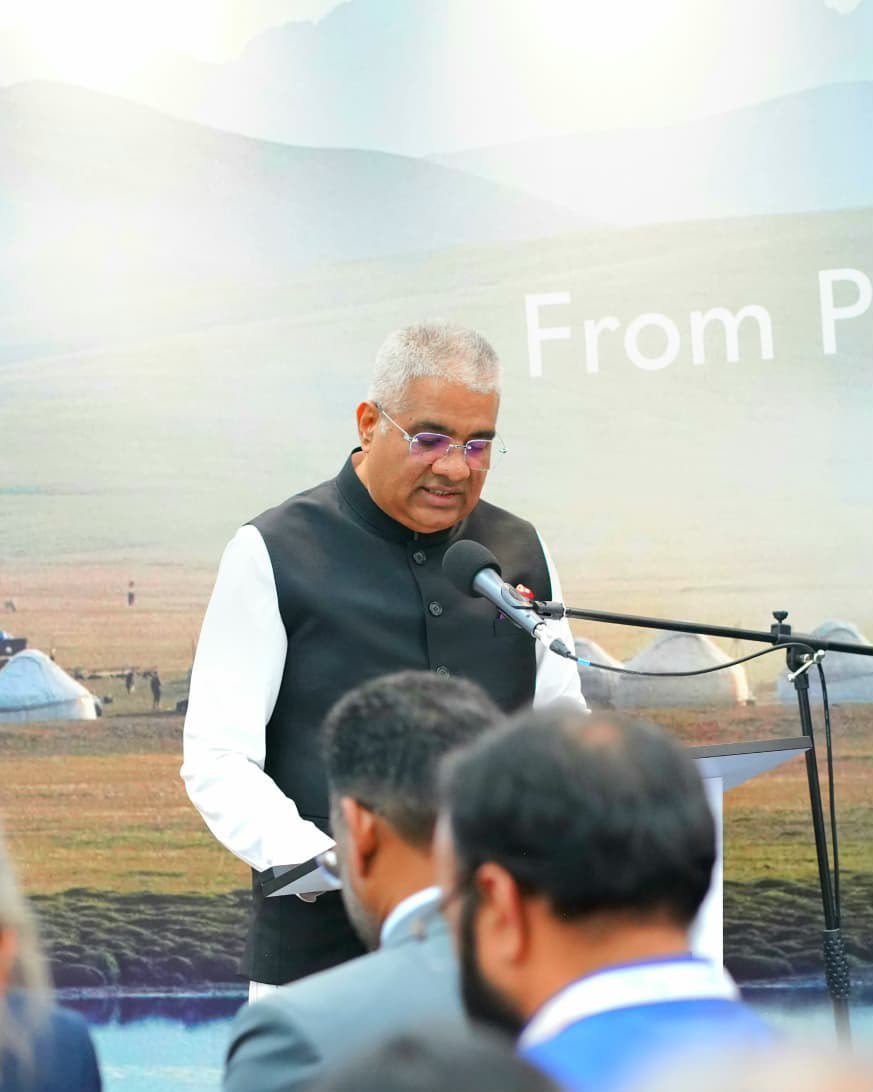
Union Environment Minister Bhupender Yadav shared these figures at the 17th Conference of the Parties to the United Nations Convention to Combat Desertification in Ulaanbaatar, Mongolia, during a side event organised by the International Union for Conservation of Nature. UNCCD COP17 India’s Second Progress Report on the Bonn Challenge tells a story that goes far beyond environmental conservation. It tells a story about jobs, livelihoods, rural economies, and the quiet, unglamorous work of healing land that most people never think about.
“India views restoration not as a standalone intervention, but as an essential component of sustainable and resilient development,” Yadav told the gathering. That single sentence captures the philosophy behind everything India has done on this front — land restoration is not an environmental side project. It is development.
What Is UNCCD COP17 India’s Global Context?
Before we get into the details, a quick primer for anyone who has not followed this space closely.
The United Nations Convention to Combat Desertification is the only legally binding international agreement that connects environment, development, and land management. It was adopted in 1994, and it deals with a problem that affects far more people than most realise — according to the UNCCD, up to 40 percent of the world’s land is degraded, impacting roughly half of humanity and threatening about half of global GDP.
COP17 — the 17th Conference of the Parties — is being held in Ulaanbaatar, Mongolia, a country where approximately 77 percent of the territory suffers from some form of land degradation. The choice of venue is itself a statement about the urgency of the problem.
UNCCD COP17 India’s participation signals that land degradation — which affects roughly 30 percent of the country’s total land area — is a national priority, not a peripheral concern. Degraded land reduces crop yields in the Indo-Gangetic plain, accelerates desertification in Rajasthan, erodes topsoil in the Western Ghats, and strips productivity from the tribal lands of central India. When India’s environment minister stands up at this global forum and presents restoration data, he is speaking about a challenge that touches hundreds of millions of Indian lives.
The Bonn Challenge — India’s Promise and India’s Progress
The Bonn Challenge was launched in 2011 by Germany and IUCN with a bold global target — bring 350 million hectares of degraded and deforested land into restoration by 2030. Over 60 countries have made pledges. India is among the largest pledgers.
In 2015, India committed to restoring degraded and deforested land. That commitment was later enhanced to 26 million hectares by 2030. UNCCD COP17 India’s Second Progress Report, covering 2011–2020, shows that the country has already restored 21.76 million hectares — putting it within striking distance of its target with several years still to go.
India’s Bonn Challenge at a Glance
| Parameter | Details |
|---|---|
| Enhanced Pledge | 26 million hectares by 2030 |
| Area Restored (2011–2020) | 21.76 million hectares |
| Employment Generated | ~1.22 billion person-days |
| Reporting Period | 2011–2020 (Second Progress Report) |
| Next Reporting Cycle | 2021–2025 (underway with IUCN and ICFRE) |
What makes UNCCD COP17 India’s reporting stand out is not just the scale — it is the honesty. The assessment does not simply count trees planted or hectares pledged. It measures actual restoration across forests, agriculture, soil and water conservation, and other land-use systems. It captures what happened on the ground, not what was promised on paper.
21.76 Million Hectares — What Does That Actually Look Like?
Numbers this large can feel abstract. So let us put them in perspective.
Twenty-one point seven six million hectares is roughly the size of the entire United Kingdom — England, Scotland, Wales, and Northern Ireland combined. Imagine restoring every square metre of that land. Forests brought back. Soil health revived. Water systems repaired. Agricultural productivity restored. That is what UNCCD COP17 India’s data shows happened over a decade, across some of the most challenging terrain in the country.
The work was not concentrated in one region or driven by one programme. It happened across India’s diverse landscapes — the degraded forests of central India, the eroded hillsides of the Western Ghats, the drought-prone lands of Rajasthan and Maharashtra, the shifting cultivation areas of the northeast, and the overworked agricultural soils of the Indo-Gangetic plain. Each landscape required a different approach, and India’s multi-sectoral strategy was designed to respond to exactly that diversity.
1.22 Billion Person-Days — The Employment Story Nobody Is Talking About
If the land restoration headline is impressive, the employment number is transformative.
One point two two billion person-days. Think about what that means in human terms. It means that over the course of a decade, millions of rural Indians — many of them from communities most affected by land degradation — found work in restoration activities. Planting trees. Building check dams. Restoring soil health. Conserving water. Rehabilitating degraded forests.
UNCCD COP17 India’s employment data makes one thing clear — this is not make-work. These are productive activities that improve the land’s capacity to support agriculture, provide clean water, sustain biodiversity, and sequester carbon. The workers who earned those 1.22 billion person-days were not just earning a living — they were rebuilding the natural capital that their communities depend on.
In a country where rural employment remains one of the most pressing economic challenges, the fact that land restoration has generated this scale of employment is a powerful argument for scaling up investment in restoration. It is not a cost. It is an economic multiplier.
As Minister Yadav put it: “These figures demonstrate that restoration can deliver both environmental and socio-economic outcomes by reviving degraded landscapes while creating employment and supporting rural livelihoods.”
How India Did It — The Programmes Behind the Numbers
UNCCD COP17 India’s restoration achievement was not the result of a single scheme. It was the convergence of multiple national programmes, each addressing a different facet of land degradation, but collectively contributing to the same goal.
Green India Mission
The Green India Mission, one of India’s eight National Missions under the National Action Plan on Climate Change, focuses on increasing forest and tree cover, improving ecosystem services, and building climate resilience in forest-dependent communities. It is the backbone of India’s forest restoration effort.
Compensatory Afforestation Fund (CAMPA)
When forest land is diverted for development projects — roads, dams, mines — the law requires equivalent afforestation to be carried out. The Compensatory Afforestation Fund Management and Planning Authority manages the money collected for this purpose. The accumulated fund runs into tens of thousands of crores, making it one of the largest dedicated restoration funding mechanisms anywhere in the world.
Nagar Van Yojana
Not all restoration happens in rural areas. The Nagar Van Yojana brings the restoration agenda into India’s cities through urban forestry and green spaces. In a country where urban expansion is eating into green cover at an alarming rate, this programme addresses the urban dimension of land degradation — creating green lungs in cities, improving air quality, and giving urban residents a connection to nature.
Watershed Development and Agroforestry
On the ground, much of the restoration work happens through watershed development programmes, agroforestry initiatives, soil and water conservation schemes, and community-based restoration projects. These are the programmes that generate the bulk of the employment — and they are the ones that directly improve the lives of the people who live on degraded land.
What Comes Next — India’s 2021–2025 Reporting Cycle
UNCCD COP17 India is not resting on its 2011–2020 results. The next reporting cycle, covering 2021–2025, is already underway in collaboration with the ICFRE Centre of Excellence on Sustainable Land Management and IUCN. This cycle will track three dimensions:
- Area restored — how much additional land has been brought under restoration
- Financial flows — how much money has been invested in restoration activities
- Employment generated — how many livelihoods have been supported through restoration work
The Minister acknowledged that the reporting process has exposed gaps in monitoring systems. Tracking restoration outcomes across India’s vast and diverse landscapes is inherently difficult, and the 2021–2025 cycle is designed to strengthen the evidence base. Better data means better policy — and better policy means more effective restoration.
Beyond 2030 — Restore Better, Finance Better
UNCCD COP17 India’s most forward-looking statement came when Minister Yadav addressed what comes after 2030. India’s objective, he said, must be not just to restore more land, but to restore better, finance better, and deliver measurable and lasting outcomes.
That requires three things:
- Innovative financing — mobilising private investment alongside public spending, because government budgets alone cannot fund restoration at the scale needed
- Stronger partnerships — sharing knowledge, technologies, and experience with other countries facing similar challenges
- Community ownership — because restoration that depends on government programmes alone will not sustain itself. It has to be owned by the people who live on the land
“Restoration is ultimately sustained by the people who depend upon and manage these landscapes,” Yadav said. That is not a policy statement. That is a recognition of reality.
Why UNCCD COP17 India’s Story Matters Beyond India
India’s restoration experience is relevant to every developing country grappling with land degradation, rural poverty, and climate change. The model — convergent government programmes, landscape-based planning, employment-linked restoration, systematic monitoring — is replicable. Not every country has India’s institutional capacity, but the principles are universal.
For the global community, UNCCD COP17 India’s numbers send a clear message: ambitious environmental commitments can be translated into measurable outcomes. Not through wishful thinking, but through sustained institutional effort, community participation, and the political will to keep investing year after year.
Impact on Chhattisgarh
Chhattisgarh sits at the intersection of several themes that India’s COP17 presentation touched upon. The state has approximately 44 percent forest cover, a large tribal population that depends on forest resources, and significant land degradation driven by mining, urbanisation, and shifting cultivation.
National programmes like the Green India Mission, CAMPA-funded afforestation, and watershed development are all active in Chhattisgarh. The state’s tribal communities — who have been custodians of forest resources for generations — are central to any restoration effort. The employment dimension is particularly relevant: in a state where rural livelihoods are under constant pressure, restoration work offers a path to both ecological recovery and economic stability.
For competitive exam aspirants in Chhattisgarh, the intersection of land restoration, tribal welfare, forest rights (Forest Rights Act, 2006), and climate action is a rich area for both Prelims and Mains preparation.
UPSC and Competitive Exam Relevance
UPSC Prelims
Direct factual questions can be expected on the UNCCD (founding year 1994, headquarters Bonn, India’s membership), the Bonn Challenge (launch year 2011, India’s pledge of 26 million hectares, global target of 350 million hectares), the Green India Mission, CAMPA, and the Nagar Van Yojana. The figures — 21.76 million hectares restored, 1.22 billion person-days of employment — are worth memorising.
UPSC Mains
GS Paper II — International agreements and India’s role in multilateral environmental governance. India’s participation at COP17 demonstrates its commitment to global environmental cooperation.
GS Paper III — Conservation, environmental degradation, climate change, India’s climate commitments under the Paris Agreement, land degradation and desertification, sustainable development, and the role of government programmes in environmental restoration. The employment angle connects to rural livelihoods and inclusive growth.
Essay Paper — Topics on sustainable development, the relationship between environmental conservation and economic growth, community participation in development, and India’s role in global environmental governance.
State PSC, SSC, and Other Examinations
Questions on UNCCD, the Bonn Challenge, India’s land restoration achievements, and the Green India Mission appear regularly in State PSC and SSC examinations. The specific figures from the Second Progress Report are current affairs items worth noting.
Frequently Asked Questions
How much land did India restore during 2011–2020?
UNCCD COP17 India’s Second Progress Report shows that 21.76 million hectares of degraded land were restored during 2011–2020, making it one of the largest restoration achievements reported by any country.
How much employment did India’s land restoration generate?
India’s land restoration efforts during 2011–2020 generated approximately 1.22 billion person-days of employment, making it one of the largest rural employment outcomes linked to environmental restoration anywhere in the world.
What is India’s pledge under the Bonn Challenge?
India pledged to restore 26 million hectares of degraded and deforested land by 2030 under the Bonn Challenge, one of the largest pledges by any country globally.
What is the UNCCD?
The United Nations Convention to Combat Desertification is the only legally binding international agreement linking environment and development to sustainable land management. It was adopted in 1994 and has 197 parties. COP17 is being held in Ulaanbaatar, Mongolia.
What is the Bonn Challenge?
The Bonn Challenge is a global effort launched in 2011 by Germany and IUCN to bring 350 million hectares of degraded and deforested land into restoration by 2030. Over 60 countries have made pledges.
What programmes drive India’s land restoration?
India’s land restoration is driven by multiple converging programmes — the Green India Mission, the Compensatory Afforestation Fund (CAMPA), the Nagar Van Yojana, watershed development programmes, agroforestry initiatives, and community-based restoration efforts.
Who represented India at UNCCD COP17?
Union Minister for Environment, Forest and Climate Change Bhupender Yadav represented India at UNCCD COP17 in Ulaanbaatar, Mongolia, speaking at a side event organised by IUCN.
The Last Word
UNCCD COP17 India’s presentation was not a wish list. It was a report card. 21.76 million hectares restored. 1.22 billion person-days of employment. A multi-sectoral institutional architecture in place. And a next reporting cycle already underway.
In a world where environmental commitments are easy to make and hard to keep, UNCCD COP17 India’s numbers stand out because they are backed by evidence — not projections, not pledges, but actual outcomes measured over a decade of sustained work. The challenge now is to maintain that momentum, strengthen the monitoring systems, mobilise more financing, and ensure that the communities who do the work on the ground are the ones who benefit most.
That is what restore better and finance better means. And at UNCCD COP17, India made clear that it intends to do exactly that.
Published by TheExamHub.in | August 24, 2026 | Source: PIB Delhi, Ministry of Environment Forest and Climate Change, UNCCD, IUCN